Best Local LLM Alternatives and Real Cost Breakdown
Deploying open-source models locally eliminates per-token API fees while keeping sensitive corporate data strictly on-premise. Total cost of ownership depends heavily on initial GPU investments, power consumption, and monthly team prompt volume.
Choosing the Right Hardware for local LLM alternatives
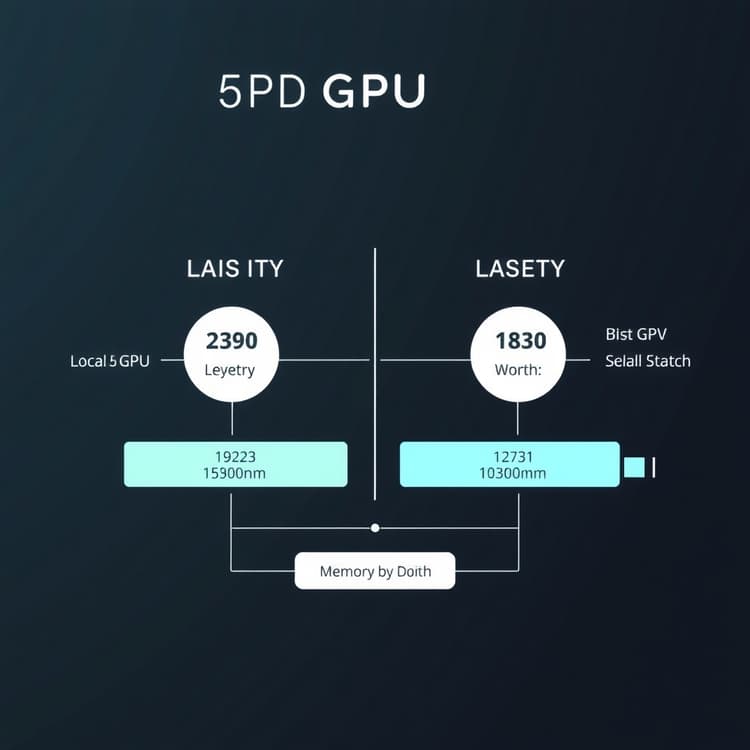
Running models locally requires significant hardware resources. You must balance VRAM capacity, memory bandwidth, and power consumption. Consumer GPUs like the NVIDIA RTX 4090 offer great speed for smaller 7B and 14B parameter models. If you need to run larger 70B models, you will need multiple GPUs or Mac Studio hardware with unified memory. Evaluating these hardware choices is crucial before committing your budget. Poor hardware choices lead to slow token generation rates and low developer productivity.
Finding the right local LLM alternatives starts with an honest audit of your daily query volume. Teams running millions of tokens monthly often save money by purchasing dedicated hardware. Smaller teams with sporadic workloads find cloud APIs more cost-effective. Check out our AI ROI & Productivity Calculator for Small Business to estimate your exact break-even point. Balancing upfront capital expenditure with recurring API subscription costs dictates your long-term financial success.
When planning your infrastructure upgrade, follow this step-by-step hardware procurement workflow:
- Audit Token Consumption: Export the last ninety days of API usage logs from your current provider. Calculate your average daily token volume and peak concurrency rates.
- Select Model Size: Match your performance needs to model sizes. Choose 8B models for basic text classification and 70B models for complex reasoning.
- Calculate VRAM Requirements: Ensure your chosen GPU has enough video memory to hold the model weights plus context cache. Add a twenty percent safety buffer for peak loads.
- Source Motherboard and Power Supply: Verify that your workstation case supports multiple cooling fans and a high-wattage power supply unit.
- Benchmark Initial Inference: Install your chosen local inference engine and run standard benchmark scripts to measure tokens per second.
Ignoring these hardware steps often results in severe thermal throttling and system crashes during peak business hours. Always invest in proper chassis ventilation and enterprise-grade power strips to protect your physical server investments.
Comparing Concrete local LLM alternatives and Pricing
To help you choose, we evaluated four concrete platforms currently dominating the market in 2026. Each tool serves different deployment needs, team sizes, and budget constraints. Let us break down their real costs, hidden fees, and operational overhead.
| Platform | Primary Use Case | Pricing Structure | Hidden Costs | Break-Even Point |
|---|---|---|---|---|
| Ollama + Local GPU | Developer testing & offline use | Free open-source software | Hardware depreciation, electricity | 4 to 6 months vs cloud APIs |
| LM Studio | Desktop UI for local models | Free for personal use / Team tiers | High-end workstation requirement | 6 months of heavy daily use |
| vLLM Enterprise | High-throughput server deployment | Free open-source / Managed add-ons | Server hosting, DevOps maintenance | 2 million tokens per day |
| Cloud API (OpenAI/Anthropic) | Zero-setup managed intelligence | Pay-per-token ($0.003 to $0.015/1k) | Variable scaling costs, rate limits | Immediate (no upfront hardware) |
Selecting among these local LLM alternatives depends on your security requirements and internal technical expertise. Ollama remains the favorite for lightweight developer machines. Meanwhile, vLLM powers robust internal company gateways that handle concurrent requests efficiently.
Consider a mid-sized digital marketing agency transitioning from cloud APIs to local deployment. They set up Ollama across twelve developer workstations to handle routine copywriting prompts. This shift eliminated monthly recurring API fees completely. However, their internal IT department spent thirty billable hours configuring network security rules. Factor these internal labor costs into your initial migration budget to get an accurate financial picture.
Calculating Hidden Costs and Power Consumption
Hardware purchases represent only part of your initial budget. Running high-end GPUs continuously increases your monthly office electricity bill. A dual-GPU workstation running local LLM alternatives can consume up to 1000 watts under full load. Maintenance, cooling, and potential hardware failures add unexpected overhead to your IT budget. Factoring in these operational expenses prevents unpleasant surprises at the end of the quarter.
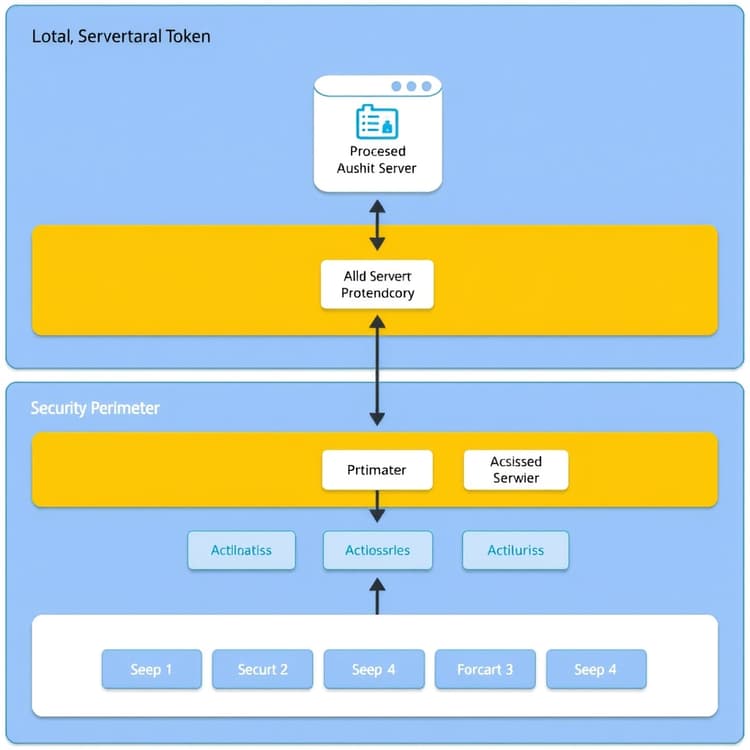
Data privacy compliance represents another hidden financial benefit of self-hosting. Sending proprietary code or medical data to third-party cloud APIs risks regulatory fines and intellectual property leaks. Local deployment guarantees data stays inside your network perimeter. This security alone justifies the hardware investment for many enterprise organizations.
To accurately track and manage your ongoing local infrastructure expenses, implement this cost control checklist:
- Monitor Wattage Draw: Install smart power meters on your server racks to track real-time electricity consumption patterns.
- Schedule Sleep States: Configure off-hours power-saving modes for development workstations that do not require twenty-four-hour uptime.
- Plan Component Lifespan: Budget for hardware replacement cycles every three years as thermal stress degrades GPU cooling fans.
- Evaluate Air Conditioning Load: Factor in extra HVAC requirements when housing multiple high-output AI servers in standard office spaces.
Failing to account for increased ambient room heat can cause premature hardware failure. Keep your server rooms well-ventilated to protect your sensitive silicon investments from thermal damage.
Optimizing Workloads with local LLM alternatives
Network latency often plagues teams relying entirely on remote cloud APIs. Local deployment drastically cuts down response times for time-sensitive coding tasks. Developers can test prompt variations instantly without hitting rate limits. Use our AI Prompt Studio & Optimizer to refine your system prompts before pushing them to local models. Fast feedback loops accelerate overall product development cycles.
Managing context windows efficiently helps reduce memory pressure on local hardware. Smaller quantized models like GGUF format variants run smoothly on standard developer laptops. For deeper technical insights on overcoming hardware limits, read our guide on How to Fix AI Workload Bottlenecks with Local LLMs. Proper quantization ensures you get high performance without buying enterprise-grade clusters.
Let us examine a real-world software engineering workflow using local optimization techniques:
- Quantization Selection: Convert baseline floating-point models into 4-bit or 5-bit GGUF formats to reduce memory footprints by seventy percent.
- Context Window Capping: Limit active chat contexts to four thousand tokens to prevent memory overflow on consumer-grade graphics cards.
- Prompt Template Tuning: Strip out unnecessary system instructions to reduce input token processing time across all local queries.
- Batch Processing Setup: Group routine data extraction tasks into single execution queues to maximize GPU utilization rates.
These small configuration tweaks make local LLM alternatives run smoothly on modest hardware setups. Your engineering teams will enjoy snappy responses without demanding expensive hardware upgrades every year.
Break-Even Math for Enterprise Teams
Let us run the numbers for a 20-person engineering team generating 5 million tokens daily. Commercial cloud APIs charging $5 per million tokens cost around $750 monthly. Purchasing a dedicated server with dual RTX 4090 GPUs costs roughly $4,500 upfront. Factoring in minimal electricity and maintenance, the hardware pays for itself in six months. After that break-even point, your marginal token cost drops close to zero.
Smaller teams generating fewer than 500,000 tokens monthly should stick with cloud providers. The math simply does not support buying local hardware for low-volume users. Analyze your company's actual usage logs before buying physical servers. Choosing the right path ensures your technology stack remains both profitable and agile.
When presenting your local LLM business case to executive leadership, follow this financial justification framework:
- Present Clear Amortization: Show how upfront capital expenditures decline in cost per month over a thirty-six-month depreciation schedule.
- Highlight Risk Mitigation: Emphasize how local hosting protects sensitive customer data from third-party cloud data breaches.
- Model Scale Scenarios: Demonstrate how fixed hardware costs accommodate future team growth without increasing monthly operational expenses.
- Include Staffing Realities: Factor in the time your systems administrator spends maintaining local servers versus managing cloud billing dashboards.
By carefully weighing these financial variables, your organization can select the ideal deployment model. Whether you choose open-source local engines or managed cloud endpoints, strategic planning ensures sustainable AI adoption.
Frequently Asked Questions
What hardware do I need to run local LLM alternatives?
Running 7B and 14B models requires an NVIDIA GPU with at least 16GB of VRAM or an Apple Silicon Mac with 32GB of unified memory. For 70B models, you need multiple high-end GPUs or a professional workstation.
Are local LLM alternatives completely free?
The software itself is usually free and open-source. However, you must factor in hidden costs including hardware depreciation, increased electricity consumption, and IT maintenance time.
When should my team switch from cloud APIs to local models?
Teams should transition when monthly cloud API token expenses exceed the cost of amortized local hardware, or when strict data privacy regulations prohibit sending proprietary data to third-party servers.
Get the Weekly SMB AI & SaaS Brief
Practical software benchmarks, prompt templates, and ROI breakdowns delivered every Tuesday. No fluff, unsubscribe anytime.