ElevenLabs Alternatives for Real-Time AI Agents in 2026
To achieve production-grade AI voice performance, transition from REST-based polling to WebSocket chunk streaming or deploy open-weight models like XTTS v2 on dedicated GPU infrastructure. While managed APIs such as ElevenLabs deliver turnkey expressive voices, self-hosted streaming eliminates per-character billing ceilings for high-volume B2B automation.

The ElevenLabs Latency and Cost Bottleneck
Building real-time conversational agents requires more than just high-quality audio; it demands extreme responsiveness. ElevenLabs has dominated the market with its superior emotional prosody, but developers frequently hit a wall when scaling. The primary friction points are the high cost per character and the inherent latency of standard REST API calls, which can exceed 1,500ms—far too slow for a natural human-to-AI conversation.
In 2026, the focus has shifted from simple text-to-speech (TTS) to low-latency streaming and speech-to-speech (S2S) workflows. If your agent feels robotic or laggy, the bottleneck is likely in your chunking strategy or your choice of model tier. Moving to a hybrid model—using ElevenLabs for high-stakes customer-facing interactions and open-source alternatives for internal or high-volume tasks—is the standard for cost-efficient engineering.
Diagnostic Runbook: Triage for High-Latency AI Voice Workflows
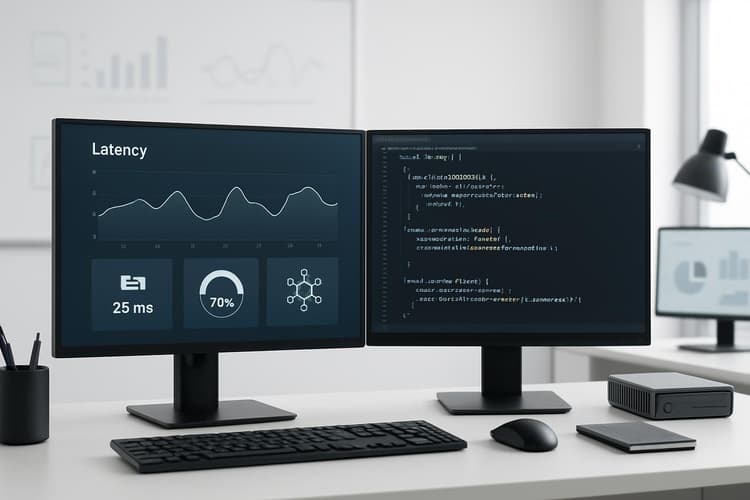
Before swapping your entire stack, identify where the delay occurs. Is it the LLM generating text too slowly, or the TTS engine struggling to synthesize the audio chunks? Use the following diagnostic table to isolate the failure mode in your current pipeline.
| Log / Error Message | What It Means | Next Verification Command / Fix |
|---|---|---|
429 Too Many Requests | API rate limit hit on ElevenLabs | Implement exponential backoff or check rate limit fixes. |
Audio chunk delay > 800ms | Network latency or large chunk size | Switch to WebSocket streaming and reduce chunk_length_schedule. |
Inconsistent prosody | Model losing context between chunks | Increase the look-ahead buffer or use a larger context window in the API. |
Connection timed out (504) | Gateway timeout on local TTS server | Verify GPU utilization and CUDA memory overhead on your host. |
To isolate the lag, run a concurrent trace on your LLM output and your TTS synthesis. If your LLM's time_to_first_token (TTFT) is under 200ms but your audio starts at 1,200ms, your TTS provider is the bottleneck. If both are high, you need to optimize your inference engine before focusing on the voice layer.
Power-User Technique: WebSocket Streaming and Chunk-Based Synthesis
To get 3x better responsiveness from ElevenLabs, you must move away from the /v1/text-to-speech endpoint and utilize their WebSocket API. Standard REST calls wait for the entire text block to be processed before sending audio. WebSockets allow you to stream text in real-time as the LLM generates it, beginning audio playback while the rest of the sentence is still being synthesized.
import websockets
import json
import asyncio

async def stream_voice(text_iterator):
    uri = "wss://api.elevenlabs.io/v1/text-to-speech/voice_id/stream-input"
    async with websockets.connect(uri) as ws:
        # Initial configuration
        await ws.send(json.dumps({"text": " ", "voice_settings": {"stability": 0.5, "similarity_boost": 0.8}}))

        async for chunk in text_iterator:
            # Send LLM tokens as they arrive
            await ws.send(json.dumps({"text": chunk, "try_trigger_generation": True}))

            try:
                # Receive audio binary data
                response = await asyncio.wait_for(ws.recv(), timeout=0.5)
                data = json.loads(response)
                if data.get("audio"):
                    yield data["audio"]
            except asyncio.TimeoutError:
                continue # Continue sending text if audio is still processing
This approach reduces the perceived latency to the time it takes for the first audio chunk to arrive, typically sub-300ms. Always implement a retry loop for transient 5xx errors and ensure your client handles audio buffer underruns gracefully to prevent stuttering.
Transitioning to Open-Source: XTTS v2 and Fish Speech Deployment
For businesses scaling to millions of characters per month, ElevenLabs' pricing becomes prohibitive. Open-source models like Coqui XTTS v2 and Fish Speech have reached a point where they can match the quality of managed services when tuned correctly. These models allow for 1-click voice cloning and can be hosted on a single NVIDIA A10G or L4 GPU.
Fish Speech, in particular, has gained traction in 2026 for its S2S capabilities. Unlike traditional TTS, S2S takes an audio input and changes the voice while preserving the original speaker's emotion and rhythm. This is a game-changer for agents that need to sound genuinely empathetic or urgent. When deploying XTTS v2, use an inference engine like Faster-Whisper for the input side and vLLM for the LLM to keep the entire stack's latency under 500ms.
Emotional Prosody Control: Beyond Basic Text-to-Speech
One non-obvious way to get 3x better output is through "Contextual Prosody Injection." Most developers send raw text to the TTS engine, resulting in a flat delivery. By injecting descriptive cues into the text or using specific SSML-like tags (depending on the provider), you can guide the AI's performance.
For ElevenLabs, you don't use standard SSML; instead, you use punctuation and "stage directions" within the prompt if the model supports it. For open-source models like Parler-TTS, you can provide a text description of the voice (e.g., "A middle-aged man with a deep, raspy voice speaking quickly in a small room"). This metadata-driven approach ensures the output matches the intent of the B2B interaction, whether it's a calm support bot or a high-energy sales agent.
Final Verdict: Cost-to-Quality Ratio for 2026 Workflows
Choosing between ElevenLabs and its alternatives depends entirely on your volume and the required emotional depth. For low-volume, high-touch applications like executive assistants or premium coaching bots, ElevenLabs' managed API remains the safest bet due to its ease of use and consistent quality.
However, for high-volume SaaS applications, the ROI of self-hosting open-source models is undeniable. By moving to a private cloud deployment of XTTS v2, you gain full control over your data privacy and eliminate character-based billing. To verify your fix, use the AI ROI & Productivity Calculator to compare the total cost of ownership (TCO) between managed character fees and reserved GPU instance costs.
Get the Weekly SMB AI & SaaS Brief
Practical software benchmarks, prompt templates, and ROI breakdowns delivered every Tuesday. No fluff, unsubscribe anytime.