Hetzner vs DigitalOcean Kubernetes Costs for 2026
DigitalOcean Kubernetes can be the lower-risk choice when your team needs a managed control plane, but its monthly bill rises quickly once each worker, load balancer, volume, and backup is counted. Hetzner Cloud can cut the infrastructure baseline substantially, but Hetzner does not offer a managed Kubernetes service, so you assume responsibility for K3s, upgrades, recovery, and cluster security. The real break-even point is usually operational: save on Hetzner only when your team can safely own that work.
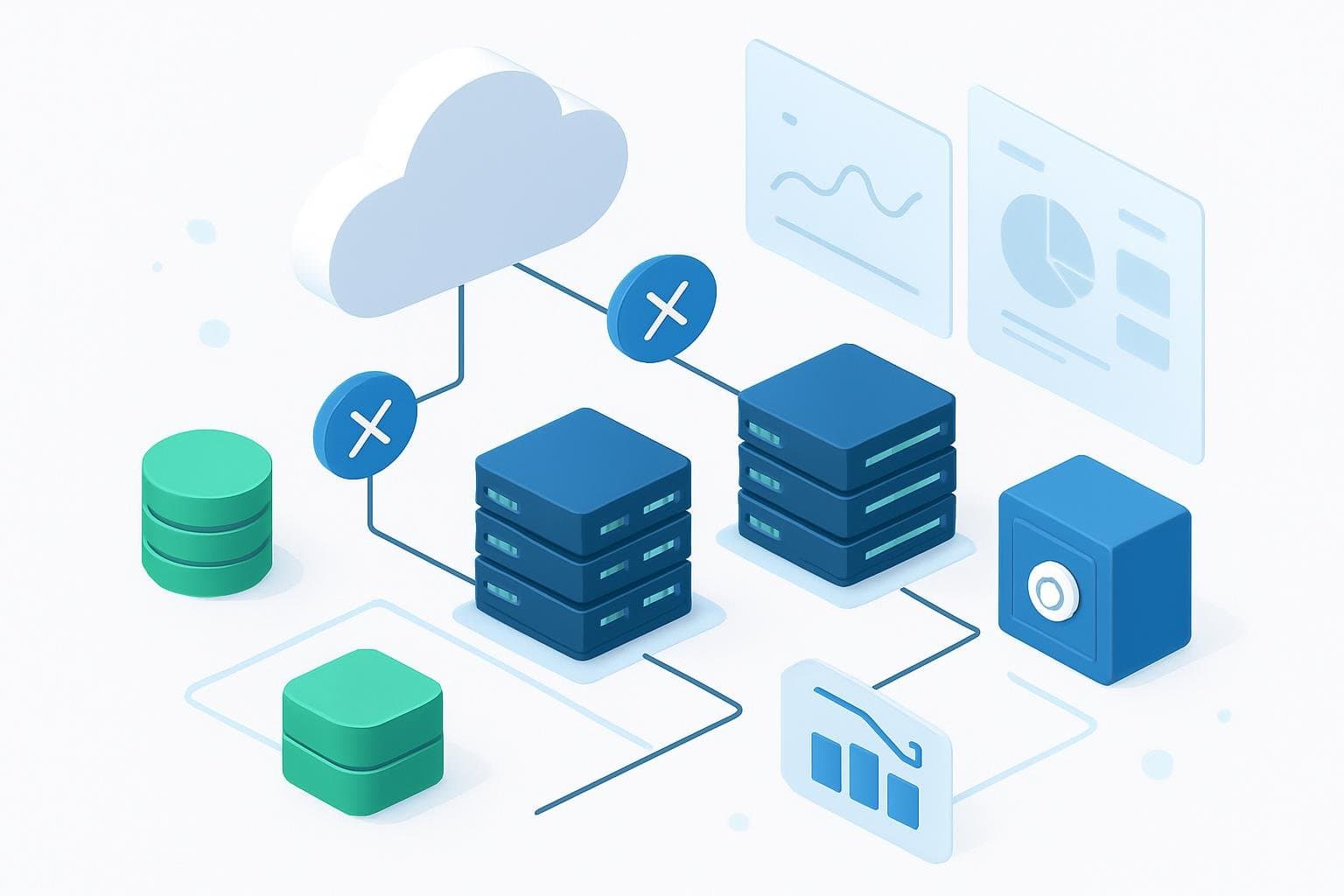
The Kubernetes bill starts after the worker nodes
A three-node cluster is often priced from its worker nodes, then unexpectedly grows through the services needed to make it usable. DigitalOcean Kubernetes (DOKS) has a managed control plane, but worker Droplets, Load Balancers, block volumes, snapshots, and backups are separate consumption choices. The control plane removes meaningful operational work; it does not make the workload’s infrastructure free.
Hetzner Cloud changes the model rather than offering an equivalent managed Kubernetes product. You can run K3s, a lightweight Kubernetes distribution, on virtual machines and pay lower server rates in many regions. You must then operate the control plane, plan upgrades, protect cluster access, and rehearse restores. That is an engineering cost, not a line item that disappears.
Use published list rates as a starting point, then confirm your selected region, currency, tax treatment, and account-specific pricing in each provider’s calculator before migrating. The illustrative scenarios below use commonly listed monthly components: a DigitalOcean 2 GB Basic Droplet at $12, DigitalOcean Load Balancer at $12, DigitalOcean block storage at $0.10 per GiB-month, and Droplet backups at 20% of Droplet price. Hetzner figures are shown in euros because its Cloud prices are billed that way; do not compare the currencies without using your own current exchange and tax assumptions.
DigitalOcean DOKS: the $65.20 small-production baseline
Consider a small DOKS service requiring three 2 GB worker nodes, one public Load Balancer, 100 GiB of block storage for persistent application data, and Droplet backups. The worker subtotal is 3 × $12 = $36. Backups add 20% of worker cost, or $7.20. The Load Balancer adds $12, while storage adds 100 × $0.10 = $10.
That produces a monthly baseline of $65.20 before bandwidth overages, container registry usage, managed database services, monitoring products, or additional environments. The important detail is that the visible cluster is only $36 of the $65.20 bill. The remaining $29.20 is reliability and state: ingress, backups, and persisted data.
A two-worker version costs $50.80 with the same 100 GiB volume and Load Balancer: $24 in workers, $4.80 in backups, $12 for the balancer, and $10 for storage. Its apparent $14.40 saving is exactly one worker plus that worker’s backup cost. It may be reasonable for staging or carefully designed workloads, but it does not provide the same node-failure tolerance as three workers.
Hetzner K3s: lower infrastructure cost, added ownership
A comparable Hetzner design can use three CX22 instances, a Cloud Load Balancer, a primary IP where required, and a persistent volume. Using example published euro list prices of €3.79 per CX22, €5.39 for a small Load Balancer, €0.50 for a primary IP, and €0.044 per GiB-month for volume storage, the infrastructure math is straightforward.
Three servers cost €11.37. A 100 GiB volume costs €4.40, then the Load Balancer and IP add €5.89. The illustrative total is €21.66 per month, excluding optional backups, snapshot retention, egress, taxes, and any third-party monitoring or off-site backup target. That looks dramatically smaller because shared-vCPU virtual machines are inexpensive and no managed Kubernetes control-plane service is included.
The break-even question is therefore not “which node costs less?” It is “can your team operate K3s safely for the difference?” If a platform engineer spends even a few hours per month handling Kubernetes upgrades, certificate rotation, node replacement, backup validation, or incident response, the labor cost can exceed the infrastructure saving. For a team already operating several clusters, that work may be routine. For a product team with one business-critical service, it can be a poor trade.
Four deployment paths and their break-even point
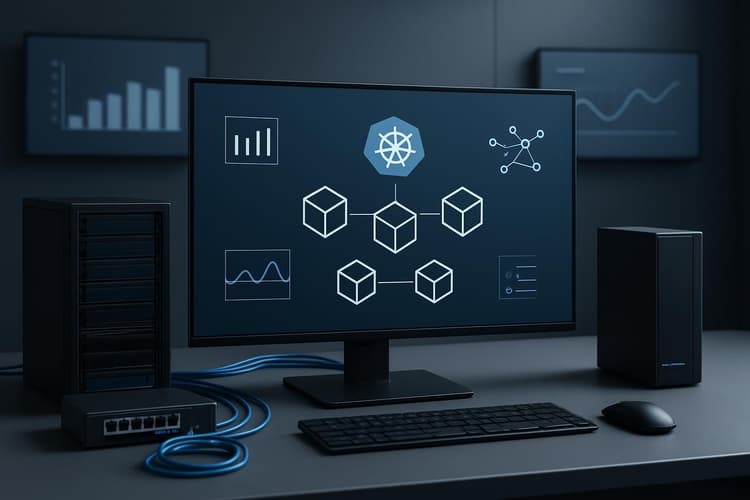
Start with the architecture required by the application, not the lowest virtual-machine price. These options cover the common paths for a small web service with persistent data.
| Option | Illustrative monthly infrastructure | What changes the bill | Best fit |
|---|---|---|---|
| DigitalOcean DOKS, 3 workers | $65.20 | More nodes, volumes, backups, bandwidth | Teams needing managed Kubernetes control plane |
| DigitalOcean DOKS, 2 workers | $50.80 | Same fixed balancer and storage charges | Staging or workloads that accept reduced redundancy |
| Hetzner Cloud K3s, 3 CX22 nodes | €21.66 | Backups, off-site recovery, operator time | Teams with proven Kubernetes operations skills |
| One larger VM with Docker Compose | Provider and VM dependent | RAM, disks, backups, failover design | Small services that do not need Kubernetes yet |
The cleanest cost breakpoint is within the DOKS model. With 100 GiB storage and one Load Balancer, a third 2 GB worker adds $14.40 per month including its backup. If your service remains healthy on two workers and does not need to tolerate a worker outage, that is an immediate, measurable saving. Do not use that calculation to remove redundancy from a revenue-critical service without testing failure behavior.
The other breakpoint is architectural. A single VM running Docker Compose removes cluster overhead, but creates a single failure domain unless you add replication and a recovery process. If your application is one API, one worker, and a managed database, Kubernetes may be the cost driver rather than a requirement. Review how to fix Docker Compose memory limit crashes in cloud stacks before consolidating workloads: a smaller bill is not useful if memory pressure repeatedly kills the service.
Charges that distort the migration spreadsheet
Persistent storage is the most common omission. A stateful service mounted on a 100 GiB volume has a recurring cost regardless of whether it receives requests. Moving containers without moving the durability design can also create a dangerous outcome: local host disks may look cheap until a node failure turns them into data loss.
Backups are different from high availability. Three nodes can keep a service available after one worker fails, but they do not recover deleted data, bad deployments, compromised credentials, or a broken database migration. Budget for snapshots and a restore destination that is independent of the failed node or account. Validate restoration on a schedule rather than treating a green backup status as proof.
Bandwidth and managed services can overturn a compute-only estimate. A managed database, object storage, log retention, image registry, and egress-heavy API can cost more than the Kubernetes workers. If PostgreSQL is your largest recurring service, compare the database architecture separately with Supabase vs Neon Postgres: Real Pricing and Limits Compared instead of folding it into an inaccurate cluster comparison.
Choose managed Kubernetes when its operational value is real
Choose DigitalOcean Kubernetes when a managed control plane, provider-supported lifecycle, and simpler day-two operations reduce a risk your team cannot comfortably own. Its bill is easier to justify when downtime, delayed security patching, or a failed restore would cost more than the monthly difference.
Choose Hetzner Cloud with K3s when lower infrastructure cost matters and you already have documented cluster provisioning, restricted admin access, tested upgrades, external backups, and an owner for alerts. Build the first cluster in staging, simulate a node loss, and restore a workload before moving production traffic.
Choose a single-host container deployment when your service does not need Kubernetes scheduling, multi-node resilience, or cluster-native tooling. This is often the most cost-effective early-stage option, provided you define recovery objectives and monitor memory, disk, and restart behavior. Revisit Kubernetes when concrete workload requirements—not fashion—justify its fixed operational overhead.
Frequently Asked Questions
Is Hetzner Cloud a direct replacement for DigitalOcean Kubernetes?
No. Hetzner Cloud supplies virtual machines, networking, volumes, and load balancers, but not a managed Kubernetes control plane. You can run K3s or another Kubernetes distribution there, but your team owns upgrades, control-plane recovery, access controls, and backup testing.
Can I remove DigitalOcean Droplet backups if I use three Kubernetes workers?
Not safely as a general rule. Multiple workers improve availability for stateless workloads, but they do not replace recoverable backups for persistent data, Kubernetes manifests, secrets recovery procedures, or database state. Define and test a restore path before reducing backup retention.
When is Docker Compose cheaper than Kubernetes?
Docker Compose is usually cheaper when one server can run the application and you do not need multi-node scheduling or automatic workload relocation. Include the cost of a tested backup, monitoring, and an acceptable recovery window; otherwise the apparent saving simply transfers risk into downtime.
Get the Weekly SMB AI & SaaS Brief
Practical software benchmarks, prompt templates, and ROI breakdowns delivered every Tuesday. No fluff, unsubscribe anytime.