ProfitWell Retain vs ChurnZero: 2026 Churn Guide
ProfitWell Retain and ChurnZero address different retention problems: Retain is positioned around recovering failed subscription payments, while ChurnZero supports customer-success workflows built on customer data. Validate connector availability, data requirements, implementation scope, and commercial terms with each vendor before selecting or combining them.
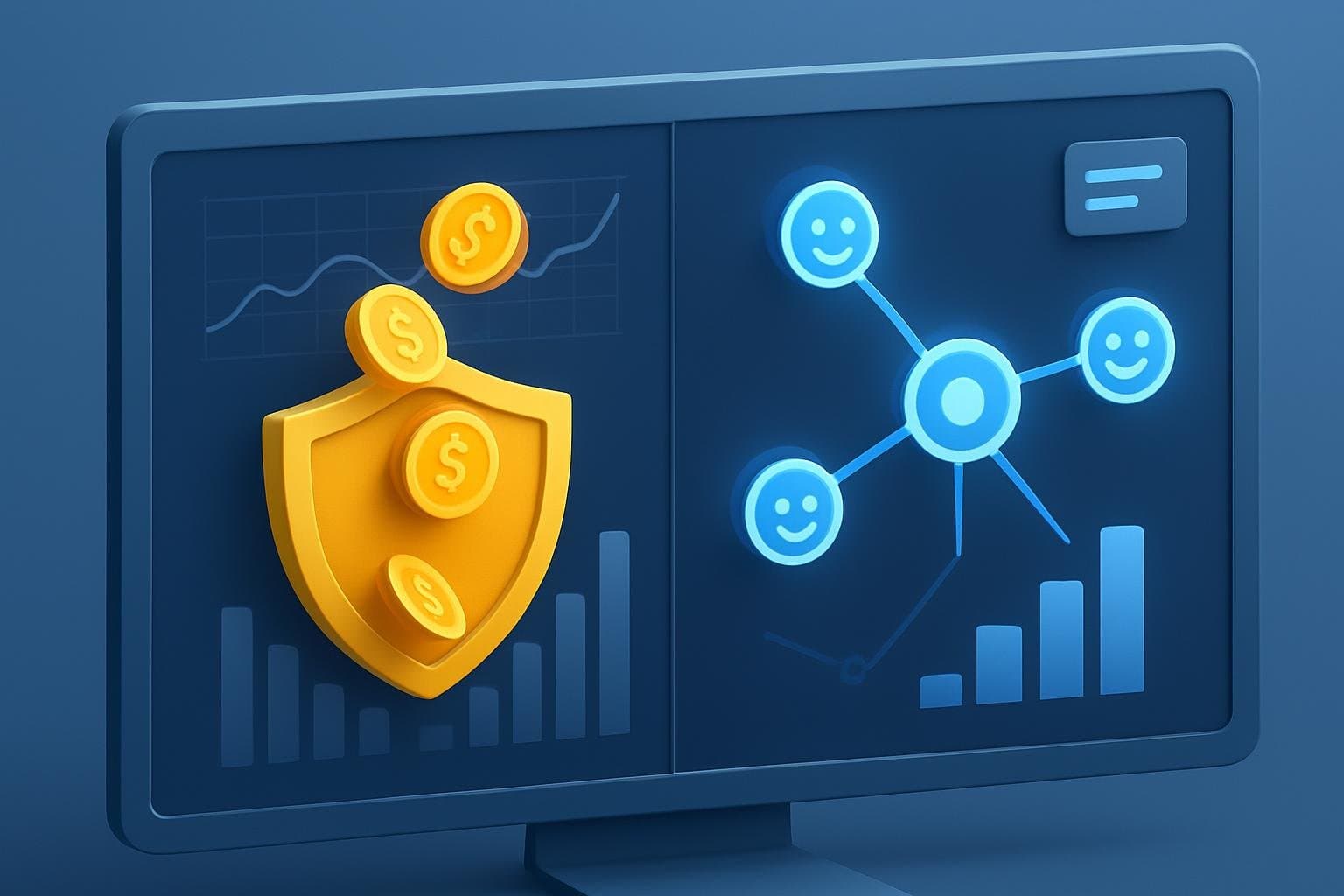
Billing Failures vs. Adoption Risk in SaaS Churn

ProfitWell Retain and ChurnZero should not be treated as interchangeable churn tools. A failed payment is a billing-operational problem; weak adoption, an unresolved support issue, or a poor fit is a customer-success problem. Start by identifying the signal behind the loss rather than routing every cancellation into the same workflow.
A processor decline does not establish why a payment failed. It can reflect insufficient funds, authentication requirements, a fraud rule, an expired payment method, a temporary processor condition, or another response defined by the payment provider. Likewise, a health score is not a universal churn predictor: its inputs, weights, and thresholds are configured by each organization.
| Log / Error Message | What It Means | Next Check |
|---|---|---|
| Payment-failure or decline event | A collection attempt failed; the provider response requires interpretation. | Inspect the provider event, response code, payment-method state, and retry history. |
| Configured low-health segment | An account met your organization’s health-score criteria. | Review the score inputs, recent product activity, support history, and renewal date. |
| Declining NRR | A business metric indicates contraction, churn, or insufficient expansion in a cohort. | Reconcile starting MRR, churn, contraction, reactivation, and expansion for that cohort. |
| Webhook delivery failure | A receiving endpoint may not have accepted or processed an event. | Check delivery status, endpoint logs, signature validation, idempotency handling, and replay procedure. |
Payment-Failure Verification Before Using ProfitWell Retain
ProfitWell Retain, now associated with Paddle, is relevant when failed subscription payments are a material and measurable source of lost revenue. Do not assume a particular retry strategy, optimization method, billing-provider connector, historical-data import, or setup path. Product availability, supported integrations, and implementation requirements can change and should be confirmed in Paddle’s current documentation and commercial materials.
Use an event-level investigation before enabling or changing any recovery workflow. The following query is a schema example; adapt table and field names to your warehouse or billing-event store.
SELECT event_type, occurred_at, provider_response_code, payment_method_id, invoice_id
FROM billing_events
WHERE customer_id = :customer_id
ORDER BY occurred_at DESC
LIMIT 20;
Symptom: a subscriber is marked past due or a payment has failed.
Verification command: run the query above, then compare the invoice and response code with the payment provider’s event record.
Output meaning: repeated failures with the same invoice identify a collection issue, but they do not by themselves identify the cause. A successful later payment may indicate that the issue resolved; it does not prove that a specific email or retry caused recovery.
Next fix: correct source-data problems first, such as a missing billing event, an invalid customer-to-subscription mapping, or duplicate webhook processing. Then configure recovery rules only through supported vendor and processor controls. Keep an auditable record of customer communications and payment attempts, particularly where regional payment, consent, or authentication requirements apply.
ChurnZero Customer-Data Workflows and Health Scores
ChurnZero is designed for customer-success teams that need to organize customer data, account context, and follow-up workflows. Its usefulness depends on the quality of the account, contact, subscription, support, and product-usage data supplied to it. Specific capabilities—such as available integrations, messaging channels, task destinations, score calculations, and automation triggers—depend on the customer’s plan, configuration, and current product support. Confirm those details in ChurnZero’s current documentation before designing an operating process around them.
A health score can help prioritize review, but it should not automatically trigger a discount, cancellation intervention, or escalation without validation. For example, a low score may reflect an intentionally inactive account, seasonal usage, incomplete instrumentation, or a legitimate change in customer behavior.
Symptom: an account appears in an at-risk health segment.
Verification command: inspect the account’s score components and compare recent product events with CRM, support, and renewal records.
Output meaning: a score decline is a prioritization signal, not a root-cause diagnosis. If activity data is missing or delayed, the score may be unreliable.
Next fix: repair identity resolution and event coverage before adjusting thresholds. Then define a playbook with an accountable owner, a review window, an approved customer contact path, and an outcome field that closes the loop on whether the intervention was appropriate.
For lifecycle email tooling that may sit alongside a success process, see Brevo vs ConvertKit: 2026 SaaS Retention Workflow Guide.
Customer Event Contract for Billing and Success Systems
Use one documented event contract rather than separate, inconsistent billing and customer-success payloads. The complete example below uses placeholder values that must be replaced in your environment. It is an event-shape example, not a claim about either vendor’s required API format.
{
  "eventId": "<YOUR_UNIQUE_EVENT_ID>",
  "eventType": "subscription.payment_failed",
  "occurredAt": "<ISO_8601_TIMESTAMP>",
  "customerId": "<YOUR_CUSTOMER_ID>",
  "subscriptionId": "<YOUR_SUBSCRIPTION_ID>",
  "invoiceId": "<YOUR_INVOICE_ID>",
  "provider": "<YOUR_BILLING_PROVIDER>",
  "providerResponseCode": "<PROVIDER_RESPONSE_CODE>",
  "amount": 0,
  "currency": "<ISO_4217_CURRENCY_CODE>",
  "idempotencyKey": "<YOUR_IDEMPOTENCY_KEY>",
  "source": "<YOUR_BILLING_EVENT_SOURCE>"
}
Verify webhook signatures using the provider’s documented method, store the raw event and verification result, and process messages idempotently. Test event delivery in a non-production environment where possible. A temporary replay or manual account update can restore an urgent workflow, but it should not replace fixing signature validation, queue failures, identity mismatches, or missing events at the source.
Commercial and Implementation Review for ProfitWell Retain and ChurnZero
Do not publish or rely on fixed recovery percentages, starting annual prices, performance-fee promises, or implementation timelines unless they are confirmed in a current vendor quote or contract. Commercial terms can vary by billing volume, contract scope, services, product tier, geography, and negotiated commitments.
| Comparison Area | ProfitWell Retain | ChurnZero |
|---|---|---|
| Primary problem to evaluate | Failed-payment recovery and billing leakage | Customer-success prioritization and retention operations |
| Required evidence | Billing-event quality, processor responses, invoice history, and recovery attribution | Reliable account identity, product events, CRM context, support data, and score governance |
| Commercial review | Confirm current pricing basis, recovery attribution rules, contract terms, and supported billing connections | Confirm subscription scope, user or account limits, implementation services, integrations, and contract terms |
| Implementation dependency | Billing-system access and accurate lifecycle events | Data modeling, telemetry coverage, workflow ownership, and change management |
Selecting a SaaS Retention Architecture
Choose ProfitWell Retain for evaluation when payment failures are clearly represented in your billing data and you need a specialized recovery process. Choose ChurnZero for evaluation when retention depends on customer context, adoption signals, ownership, and structured follow-up across a success team.
Mature SaaS organizations may use both categories: billing-recovery controls for failed collections and customer-success operations for adoption and renewal risk. The correct sequence is determined by the evidence. First quantify payment-failure leakage and validate billing events; then assess whether product, CRM, and support data can support accountable customer-success workflows. Obtain current product, integration, security, and commercial confirmations from Paddle and ChurnZero before committing to an architecture.
Frequently Asked Questions
Can I use ProfitWell for free?
Yes, ProfitWell Metrics is free forever. It provides industry-standard reporting on MRR, LTV, and churn. You only pay for their 'Retain' (recovery) or 'Recognized' (revenue recognition) products.
Does ChurnZero replace my CRM?
No. ChurnZero integrates with CRMs like Salesforce or HubSpot. It is designed to sit on top of your CRM, focusing specifically on post-sale activity and product usage data that CRMs typically don't track well.
Which tool is better for preventing deliberate cancellations?
ChurnZero is far superior for deliberate cancellations because it identifies 'at-risk' behavior weeks before a user clicks 'cancel,' allowing your team to intervene. ProfitWell primarily handles technical failures.
Get the Weekly SMB AI & SaaS Brief
Practical software benchmarks, prompt templates, and ROI breakdowns delivered every Tuesday. No fluff, unsubscribe anytime.